/ Oct 16, 2026
Trending
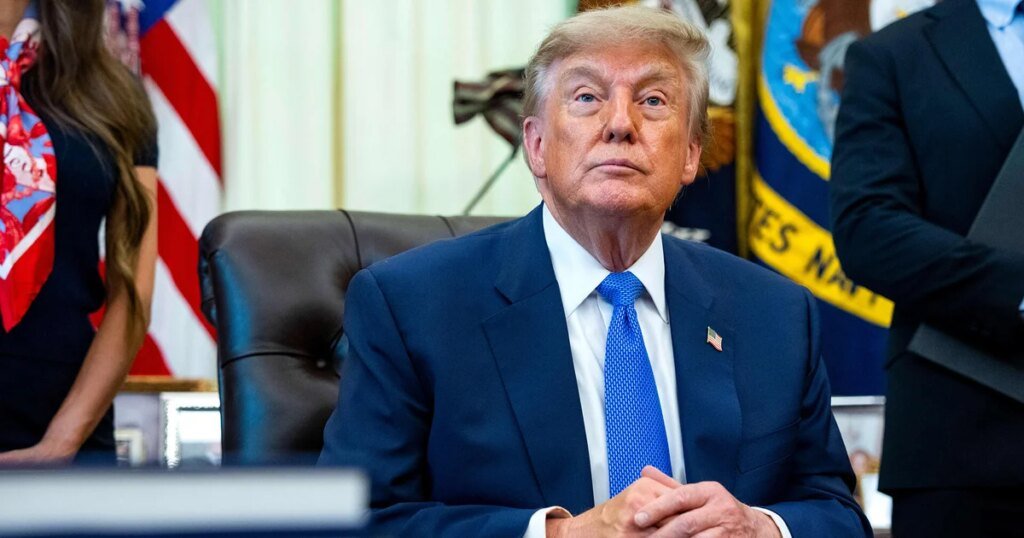
President Trump said Tuesday he has paused the 50% tariffs on a range of Canadian goods that were set to take effect Wednesday.
“I have paused the 50% Tariffs against Canada, that were scheduled to kick in tomorrow morning for a three day period, based on the fact that Canada and the U.S.A., subject to the finalization of documents, have a DEAL!” Mr. Trump said in the Truth Social post.
On Monday, Canadian Prime Minister Mark Carney told reporters that the U.S. and Canada were “negotiating.”
“The negotiations are very intense and delicate. This is not the time to talk about negotiations in public,” Carney told reporters Monday, speaking in French.
The 50% tariffs would affect $20 billion worth of Canadian products, ranging from hockey sticks to tongue depressors.
But the political impact would likely have been bigger than the economic one. Canada had threatened to retaliate against any new tariffs with levies of its own, aggravating a trade fight between countries that sold each other $880 billion worth of goods and services last year.
In a statement Tuesday night, Carney said “substantial progress has been made, although there is important work still to be done.”
“As this work is ongoing, the United States has agreed to postpone the implementation of its 50% tariff on a range of Canadian goods under Section 338 of the U.S. Tariff Act of 1930 until end of day, August 21,” Carney said. “While we continue this work, Canada remains focused on building a stronger, more independent, and more competitive economy at home.”
Carney and Mr. Trump had spoken twice by phone in the past two days about the ongoing negotiations, including a call Tuesday afternoon, Carney’s office said, underscoring the last-minute push for a deal.
In announcing the tariffs last month, the White House accused Canada of taking “unreasonable, unequal, and discriminatory actions” by imposing tariffs or import restrictions on certain American goods, including measures introduced after Mr. Trump’s initial round of tariffs on Canada last year.
Both countries had reason to step back from the brink. Nearly 72% of Canada’s goods exports last year went to the United States. And the Trump administration would be taking a risk by imposing a hefty new tariff — paid by U.S. importers who try to pass along the cost to consumers via higher prices — ahead of November’s midterm elections. U.S. voters are already frustrated with the high cost of living.
“I don’t think either side really wants these tariffs to come into effect,” Ryan Majerus, a partner at King & Spalding and a former U.S. trade official, said before the delay was announced. “There’s a pretty strong push on both sides to find an off-ramp here.”
The Trump administration currently imposes a 10% tariff on goods from Canada, the U.S.’s second-largest trading partner after Mexico, though most Canadian imports are exempt because they comply with the U.S.-Mexico-Canada Agreement, a trade deal signed during Mr. Trump’s first term.
Mr. Trump has had a tense relationship with Canada due to trade, NATO, a dispute over a Detroit-area bridge and his threats to make Canada the U.S.’ 51st state.
The president has made tariffs the centerpiece of his second-term economic agenda. Last year, he imposed double-digit import taxes on almost every country, justifying them by declaring the longstanding U.S. trade deficit a national emergency. The Supreme Court in February ruled that he’d overstepped his authority, striking down those tariffs and setting the stage for the federal government to pay refunds to importers.
So Mr. Trump has looked for other legal authority to impose tariffs.
To hit Canada, he reached back to the Great Depression, invoking Section 338 of the Tariff Act of 1930 to threaten 50% tariffs on products that account for about 5% of Canadian exports to the United States.
Nearly a century ago, with the U.S. and world economies in collapse, Congress passed the 1930 tariff law, imposing taxes on imports from around the world. Known as the Smoot-Hawley tariffs, named for their congressional sponsors, they are notorious among economists and historians for limiting world commerce and making the Great Depression worse.
Section 338 tariffs have never been used before.
Section 338 authorizes the president to impose tariffs of up to 50% on imports from countries that have discriminated against U.S. businesses. No investigation is required to justify the levies. Nor is there any limit on how long the tariffs can stay in place.
The U.S. is renegotiating a North American trade pact — the US-Mexico-Canada Agreement — that Mr. Trump strong-armed America’s neighbors into accepting in his first term. The threat of Section 338 tariffs gives the U.S. leverage to seek fresh concessions from Ottawa.
Joe Walsh
contributed to this report.
In:
President Trump said Tuesday he has paused the 50% tariffs on a range of Canadian goods that were set to take effect Wednesday.
“I have paused the 50% Tariffs against Canada, that were scheduled to kick in tomorrow morning for a three day period, based on the fact that Canada and the U.S.A., subject to the finalization of documents, have a DEAL!” Mr. Trump said in the Truth Social post.
On Monday, Canadian Prime Minister Mark Carney told reporters that the U.S. and Canada were “negotiating.”
“The negotiations are very intense and delicate. This is not the time to talk about negotiations in public,” Carney told reporters Monday, speaking in French.
The 50% tariffs would affect $20 billion worth of Canadian products, ranging from hockey sticks to tongue depressors.
But the political impact would likely have been bigger than the economic one. Canada had threatened to retaliate against any new tariffs with levies of its own, aggravating a trade fight between countries that sold each other $880 billion worth of goods and services last year.
In a statement Tuesday night, Carney said “substantial progress has been made, although there is important work still to be done.”
“As this work is ongoing, the United States has agreed to postpone the implementation of its 50% tariff on a range of Canadian goods under Section 338 of the U.S. Tariff Act of 1930 until end of day, August 21,” Carney said. “While we continue this work, Canada remains focused on building a stronger, more independent, and more competitive economy at home.”
Carney and Mr. Trump had spoken twice by phone in the past two days about the ongoing negotiations, including a call Tuesday afternoon, Carney’s office said, underscoring the last-minute push for a deal.
In announcing the tariffs last month, the White House accused Canada of taking “unreasonable, unequal, and discriminatory actions” by imposing tariffs or import restrictions on certain American goods, including measures introduced after Mr. Trump’s initial round of tariffs on Canada last year.
Both countries had reason to step back from the brink. Nearly 72% of Canada’s goods exports last year went to the United States. And the Trump administration would be taking a risk by imposing a hefty new tariff — paid by U.S. importers who try to pass along the cost to consumers via higher prices — ahead of November’s midterm elections. U.S. voters are already frustrated with the high cost of living.
“I don’t think either side really wants these tariffs to come into effect,” Ryan Majerus, a partner at King & Spalding and a former U.S. trade official, said before the delay was announced. “There’s a pretty strong push on both sides to find an off-ramp here.”
The Trump administration currently imposes a 10% tariff on goods from Canada, the U.S.’s second-largest trading partner after Mexico, though most Canadian imports are exempt because they comply with the U.S.-Mexico-Canada Agreement, a trade deal signed during Mr. Trump’s first term.
Mr. Trump has had a tense relationship with Canada due to trade, NATO, a dispute over a Detroit-area bridge and his threats to make Canada the U.S.’ 51st state.
The president has made tariffs the centerpiece of his second-term economic agenda. Last year, he imposed double-digit import taxes on almost every country, justifying them by declaring the longstanding U.S. trade deficit a national emergency. The Supreme Court in February ruled that he’d overstepped his authority, striking down those tariffs and setting the stage for the federal government to pay refunds to importers.
So Mr. Trump has looked for other legal authority to impose tariffs.
To hit Canada, he reached back to the Great Depression, invoking Section 338 of the Tariff Act of 1930 to threaten 50% tariffs on products that account for about 5% of Canadian exports to the United States.
Nearly a century ago, with the U.S. and world economies in collapse, Congress passed the 1930 tariff law, imposing taxes on imports from around the world. Known as the Smoot-Hawley tariffs, named for their congressional sponsors, they are notorious among economists and historians for limiting world commerce and making the Great Depression worse.
Section 338 tariffs have never been used before.
Section 338 authorizes the president to impose tariffs of up to 50% on imports from countries that have discriminated against U.S. businesses. No investigation is required to justify the levies. Nor is there any limit on how long the tariffs can stay in place.
The U.S. is renegotiating a North American trade pact — the US-Mexico-Canada Agreement — that Mr. Trump strong-armed America’s neighbors into accepting in his first term. The threat of Section 338 tariffs gives the U.S. leverage to seek fresh concessions from Ottawa.
Joe Walsh
contributed to this report.
In:

It is a long established fact that a reader will be distracted by the readable content of a page when looking at its layout. The point of using Lorem Ipsum is that it has a more-or-less normal distribution
The Us Media 2025


